

Products
ICP Engineering Solutions (M) Sdn Bhd offers high-quality & standard cathodic protection-related products, which are suitable for use in a wide variety of applications, such as buried pipelines, storage tanks, power plants, marine structures, and other industrial facilities.
High-Potential Pre-Packaged Magnesium Anode
Our Magnesium anode is cast from high-purity magnesium, which exhibits excellent electrochemical performance.
Each anode is pre-packaged in a permeable cotton bag, surrounded by a low-resistivity backfill mixture. Likewise, the backfill consists of 75% hydrated gypsum, 20% bentonite, and 5% sodium sulfate.
Similarly, we supply each anode with a standard 3m length of 10mm² XLPE/PVC single-core copper cable tail to ensure easy installation and reliable electrical connection.
The anode is available in different sizes:
- 2.3kg
- 4.1kg
- 7.7kg
- 14.5kg


Aluminium Anode (Al)
Aluminium anodes provide efficient cathodic protection for marine structures, submarine pipelines, storage tanks, and other submerged or buried metallic assets.
In comparison, aluminium anodes offer a high current capacity and lower consumption rate compared to zinc and magnesium, making them cost-effective for long-term protection, especially in seawater environments.
Standard Configuration:
- Welded Type
- Bolted Type
- Stand-Off Type
- Bracelet Type


Zinc Anode (Zn)
Zinc anodes are designed for effective cathodic protection of metal structures exposed to seawater, brackish water, and soil environments. In the same way, it offers stable potential, reliable performance, and high current efficiency. In addition, Zinc anodes provide reliable performance in environments demanding moderate to low resistivity and steady current output.
Standard Configuration:
- Welded Type
- Bolted Type
- Rod Type
- Probe Type
- Ribbon Type


Magnesium Anode (Mg)
Magnesium sacrificial anodes are highly effective for cathodic protection in high-resistivity environments such as soil and fresh water. Moreover, it is known for its high driving voltage; magnesium anodes are ideal for protecting buried or submerged metallic structures like pipelines, tanks, and water heaters.
Standard Configuration:
- Pre-Packaged
- Stand-Off Type
- Probe Type
- Rod Type
- Ribbon Type


Copper/Copper Sulfate (Cu/CuSO₄) Reference Electrode
The Cu/CuSO₄ reference electrode serves as a reliable monitoring tool for underground and buried metallic structures, particularly in soil or freshwater environments. As a result, it provides a stable and repeatable reference potential, crucial for monitoring and maintaining cathodic protection systems.
Applications:
- Potential measurement of buried structures
- Direct Current Voltage Gradient (DCVG)
- Close Interval Potential Survey (CIPS)
Types Available:
- Portable Cu/CuSO₄ Reference Electrode: For field surveys and spot measurements in fresh water and soil environment.
- Permanent Cu/CuSO₄ Electrode: For long-term burial installations near protected structures.

Silver/Silver Chloride (Ag/AgCl) Reference Electrode
The Ag/AgCl reference electrode is a widely used reference cell for marine, brackish water, and concrete environments, due to its stability in chloride-rich conditions and consistent reference potential. Therefore, it is ideal for cathodic protection systems involving offshore structures, ship hulls, subsea pipelines, and reinforced concrete.
Applications:
- Offshore platforms and structures
- Marine vessel hulls and ballast tanks
- Subsea pipelines and risers
Types Available:
- Portable Ag/AgCl Reference Electrode: For field surveys and spot measurements in marine and chlorine-rich environments.
- Permanent Ag/AgCl Electrode: For long-term installation in marine, offshore, and reinforced concrete structures.

Zinc Reference Electrode for Anode Monitoring & Cathodic Protection
The Zinc Reference Electrode plays a key role in corrosion monitoring and cathodic protection systems, particularly in freshwater and soil environments. Additionally, it provides a stable and reliable reference potential for potential measurements in buried pipeline monitoring and tank protection.
Applications:
- Buried structures such as tanks and pipelines.
- Field surveys and spot measurements in freshwater and soil.
Types Available:
- Portable Zinc Reference Electrode: For field surveys and spot measurements in freshwater and soil environments.
- Permanent Zinc Electrode: For long-term installations, typically in underground or buried structures that require consistent monitoring over time.
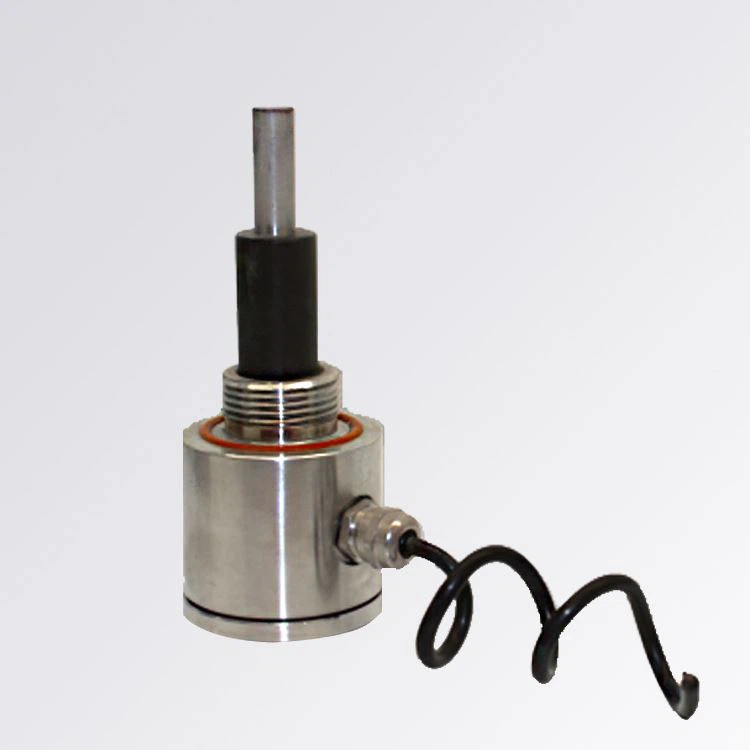
Transformer Rectifier Unit
The Transformer Rectifier Unit (TRU) serves as a critical component in ICCP systems. Equally, it reduces or adjusts the incoming AC voltage to a desired level suitable for rectification. Subsequently, the rectifier converts AC current into a regulated DC output using diodes, thyristors, or silicon-controlled rectifiers (SCRs), and then applies it to the structure requiring protection (e.g., pipelines, tanks, offshore platforms) to prevent corrosion.
Key Features
- Adjustable DC Output:
- Typically ranges from 0–50+ volts and 0–100+ amps, depending on system size.
- Cooling Systems:
- Air cooling
- Oil cooling
- Types Available:
- Floor Mounted/ Plinth Mounted/ Wall Mounted
- Explosion Proof/ Non-Explosion Proof
- Enclosure: Stainless Steel/ Coated Steel


ICCP Anode
The most commonly used anode in the ICCP system is the Mixed Metal Oxide (MMO) Anode. This anode consists of a titanium substrate coated with mixed metal oxides such as iridium, ruthenium, or other platinum group metals. In addition, these anodes are designed for long service life, low consumption rates, and excellent performance in a wide range of cathodic protection applications, making them ideal for both onshore and offshore environments. Furthermore, their high durability and stability under varying operating conditions contribute to reduced maintenance and reliable long-term operation.
Moreover, when energised with DC current, the MMO coating catalyses the oxidation of species in the electrolyte (such as water or chloride ions), delivering protective current to the structure without significant self-consumption.
Available in Multiple Forms:
- MMO Tubular Anode
- MMO Rod Anode
- MMO Wire Anode
- MMO Ribbon Anode
- MMO Mesh/Grid Anode
- MMO Disc or Plate Anode

MMO Wire Anode

MMO Tubular String Anode

MMO Flexible Linear Anode

MMO Canister Anode
Monitoring Test Post
A Monitoring Test Post (also called a Test Station) is a key component in any Cathodic Protection (CP) system. It provides a location to access electrical connections of the CP system, conducting potential measurements, checking current flow, and performing diagnostics or maintenance on the protected structure (e.g., pipelines, tanks, or steel structures).
Types Available:
- Big Fink Test Post
- Flush-Mounted Test Post
- G.I. Conduit Test Post
- Metal Pigeon Test Post
- Concrete Chamber Test Post
- Cast Iron Test Post


Cathodic Protection Cable
Cathodic Protection Cable is a specially designed electrical cable used to carry DC current from the power source (e.g., Transformer Rectifier Unit or sacrificial anode) to the protected metallic structure and/or anodes in a CP system. By the same token, ICP Engineering engineers it to withstand harsh underground, underwater, and marine environments, ensuring long-term durability and low electrical resistance.
Types Available:
- HMWPE (High Molecular Weight Polyethylene)
- XLPE (Cross-Linked Polyethylene)
- PVC (Polyvinyl Chloride)
- PVDF (Polyvinylidene fluoride)
- XLPE/HMWPE
- XLPE/PVC
- PVDF/HMWPE


Insulating Flange (IF) Kit
An Insulating Flange Kit (also known as an Isolating Gasket Kit) is a mechanical assembly used to electrically isolate sections of pipelines, typically between cathodically protected and non-protected systems, or between two different CP zones. Likewise, these kits are essential for preventing stray current corrosion, unwanted electrical continuity, and ensuring accurate CP system operation.
Kit Components:
- Insulating Gasket
- Insulating Sleeves
- Insulating Washers
- Metal Washers

Spark Gap
A spark gap is an electrical safety device used in cathodic protection systems to prevent high-voltage surges from damaging equipment. It consists of two conductive electrodes placed at a specified distance from each other, allowing electrical currents to pass through only when the voltage exceeds a certain threshold. Also, once the voltage reaches the set level, the spark gap creates an arc, safely dissipating the excess energy.

Anti-Corrosion Tape
Anti-Corrosion Tape is a cold-applied, self-adhesive wrapping system designed to protect metallic surfaces—especially buried or submerged pipelines, fittings, and steel structures—from corrosion caused by moisture, soil chemicals, and electrolytic action. One common type is Bitumen-based tape, such as Bitutape, which provides an effective barrier between the metal surface and corrosive environments.


Thermit Welding Tools
Thermit Welding Tools are specialised equipment used for performing exothermic welds to create permanent, low-resistance connections between conductors, such as CP cables, ground rods, rebars, or rails.
Moreover, it is widely used in Cathodic Protection (CP) systems, especially for bonding CP cables to pipelines, steel structures, or reinforcing bars, as it ensures excellent electrical conductivity, corrosion resistance, and mechanical strength.
It includes:
- Thermit Welding Mould
- Thermit Welding Catridge
- Flint Gun
- Cleaning Brush


Royston Handycap IP
Technicians thermit-weld or mechanically connect CP cables to pipelines; the coating at the connection point must be removed to access bare metal. After the bond is made:
- The exposed area (cutback) must be re-coated to prevent corrosion.
- A Royston Handy Cap® is often applied as a field-applied coating repair solution because it’s:
- Fast and easy to install
- Compatible with most existing coating systems
- Effective at sealing around irregular surfaces like welds and cable entries
